
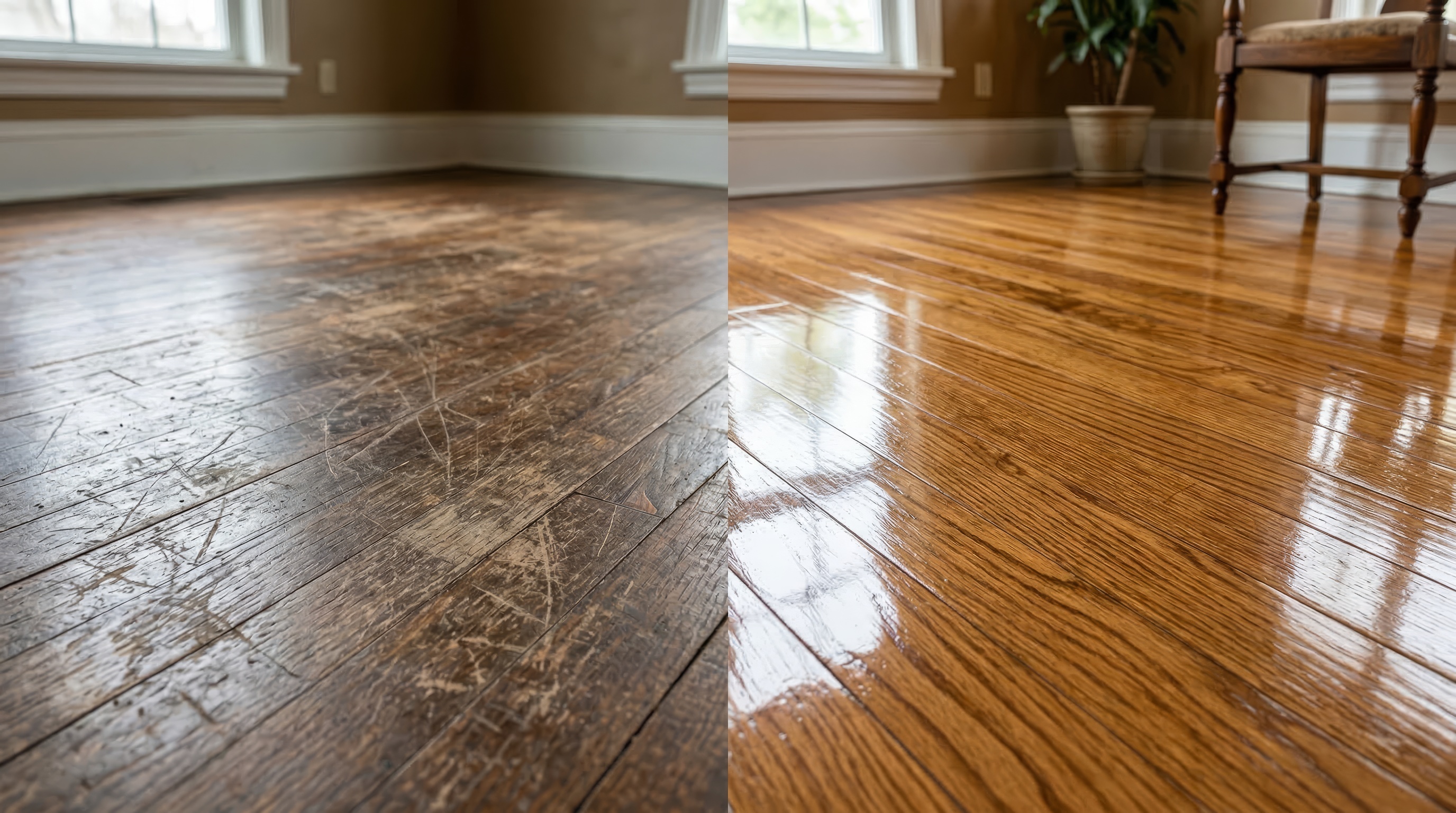
Dry Denver winters and tracked-in grit wear down a floor's protective finish long before the wood underneath loses its structural integrity. Choices range from a single-day screen and recoat to a complete sand-down to bare wood, depending on how deep those scratches actually go. Determining whether your hardwood needs a quick topcoat maintenance buff or a complete sand-down to raw wood saves time, mess, and unnecessary expense.
Understanding the Physical Difference Between Refinishing Methods
Hardwood refinishing falls into two distinct categories based on how deeply technicians work into the surface layers. Choosing the right method depends on whether the damage sits inside the top protective polyurethane layer or extends deep into the real wood fibers underneath.
What Is a Screen and Recoat?
A screen and recoat, often called a maintenance buff, restores the top layer without removing any actual wood. Technicians use a rotary floor machine fitted with a fine mesh screen to lightly abrade the existing polyurethane finish. This buffing action removes micro-scuffs, surface haze, and superficial scratches from the clear protective topcoat. A fresh, durable coat of commercial-grade finish goes directly over the abraded surface to seal the floor. The entire process takes a single day, generates minimal dust, and keeps your original wood thickness completely intact.
What Is a Full Sanding and Refinishing?
Full sanding resets the entire flooring surface down to bare, raw wood. Heavy belt sanders and edge tools strip away all existing polyurethane, stain, and a thin layer of the real wood itself. Deep gouges, dark pet stains, structural cupping, and deep scratches disappear during this multi-stage grinding process. Technicians apply new stain to change the floor color if desired, followed by multiple fresh protective topcoats. This process takes several days, needs comprehensive dust containment, and removes a small amount of your total sandable wood layer.
Signs Your Hardwood Qualifies for a Screen and Recoat
A screen and recoat offers the least invasive way to refresh hardwood, but it only works when the underlying wood remains structurally sound and healthy. Your floor is likely a candidate for a simple buff and topcoat if you notice:
Light Surface Scuffs: Micro-scuffs, light shoe marks, and dull areas in high-traffic hallways affect only the top clear finish.
Consistent Stain Color: Your current wood stain looks even across the entire room with no bare timber or gray patches showing through.
Shallow Surface Scratches: Minor scratches from pets or furniture disappear completely when you rub a single drop of water across the surface.
Firm Finish Adhesion: Your original polyurethane layer remains firmly attached to the wood without peeling, flaking, or wearing away to raw timber.
When Full Sanding Becomes Necessary
Certain types of damage extend past the clear polyurethane coating, making a full sand-down the only viable restoration path. High-traffic walkways that show bare, unsealed wood mean the protective finish wore away completely, leaving the raw fibers exposed to moisture and dirt. Deep scratches and gouges that score the actual wood below cannot be buffed out, nor can dark gray water stains, cupped boards, or severe winter moisture damage. A complete sand-down also becomes necessary if you want to update your room's aesthetic by changing your floor stain color, such as transitioning from an outdated dark amber to a modern, light natural tone.
High-Altitude Climate Factors and Wood Preservation
Denver Metro's high-altitude semi-arid climate creates unique environmental demands on local hardwood floors. Low indoor humidity during dry winter heating seasons causes real wood planks to contract, widening board gaps across living rooms in South Metro neighborhoods like Highlands Ranch and Lone Tree.
Every full sanding cycle removes precious wood thickness, reducing the plank's ability to handle these seasonal expansion and contraction cycles over time. Opting for a screen and recoat whenever possible preserves your floor's structural integrity and keeps your sandable wood layer healthy for decades to come.
Evaluate Your Hardwood with Wagner Floors
Knowing whether your floors need a quick topcoat refresh or a full sand-down keeps your home improvement plans on track and on budget. Wagner Floors brings over 12 years of hands-on local experience and 8,000 completed area projects to every surface evaluation. Our team evaluates your floor's condition with total transparency, backed by our No-Surprise Quote Guarantee and Lifetime Installation Warranty. We eliminate the guesswork by bringing finish samples and technical guidance straight to your front door with a FREE in-home Design Consultation through our primary mobile showroom. Contact Wagner Floors today to schedule your consultation and find the least invasive way to refresh your hardwood.


