

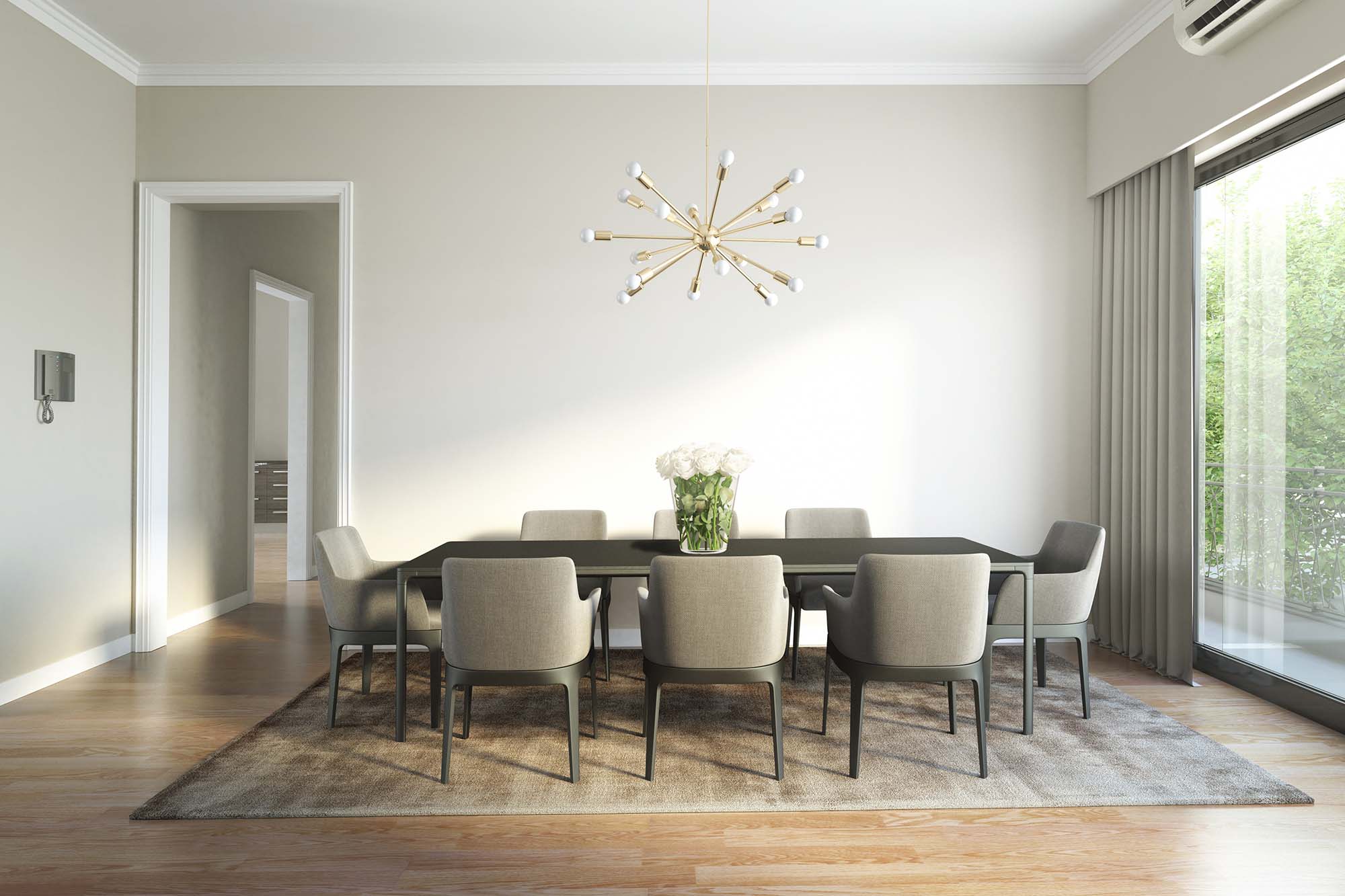
Furniture usually gets most attention when planning a room, yet the rug determines if the layout actually works. Many homeowners pick a small rug because they want to keep their new hardwood floors visible. But the right-sized rug helps your space feel welcoming and prevents furniture from looking like it is drifting in the middle of the room. Scale is the most important factor in making a large living area or bedroom feel grounded. When the dimensions are correct, the rug acts as a foundation that pulls every piece of furniture together into a single, intentional group.
Establishing Visual Grounding with Scale
Rugs serve as the primary foundation for furniture, especially in the open floor plans common in contemporary Colorado architecture. Choosing an area rug too small for the space makes a room feel fragmented and unfinished. A larger rug provides a sense of continuity that connects individual furniture pieces into a cohesive seating or dining area. This visual anchor tells the eye exactly where a room begins and ends, which is essential when a kitchen, dining room, and living room all share the same square footage.
Living Room Layouts and Furniture Leg Placement
Standard living room layouts require an 8x10 or 9x12 rug to look complete. Smaller formats often leave sofas and chairs stranded without a visual anchor. Placing at least the front legs of all seating on the rug creates a unified conversation group. This configuration anchors the furniture and keeps the rug from sliding or looking like it is floating in the center of the floor. Open-concept homes use these specific dimensions to mark the boundaries of a seating area without the need for walls.
Some large rooms work best with the all-on approach, where every piece of furniture sits entirely on the rug surface. This layout typically demands 12x15 formats and works well in rooms with high ceilings and substantial floor space. Keeping twelve to eighteen inches of bare floor visible around the perimeter of the rug ensures the room still feels balanced. Selecting a larger size allows the furniture to breathe and prevents the layout from feeling cramped or forced.
Dining Room Clearance and Chair Stability
Functionality dictates rug size in a dining room more than in any other part of the home. A rug must be large enough to accommodate chairs, even when guests pull them back to sit down or stand up. If the back legs of a chair fall off the edge of the rug during normal use, the rug is too small. This is a common point of frustration that often leads to uneven wear on the floor and the rug itself.
Measuring thirty inches of clearance from the edge of the tabletop ensures the chairs stay on a level surface at all times. For a standard six-person table, an 8x10 rug is often the minimum requirement, while larger eight-person sets usually need a 9x12. Aligning the shape of the rug with the dining table provides a symmetrical look and protects the hardwood or laminate underneath from the repetitive movement of heavy chair legs. A properly sized rug prevents guests from tripping on the rug edge and keeps the dining experience comfortable.
Bedroom Proportions for Comfort
Bedroom layouts rely on the rug to provide a soft perimeter and a layer of visual warmth. Placing a rug perpendicular to the bed frame, under the bottom two-thirds, is the standard for a modern look. This configuration allows the nightstands to sit firmly on the hardwood floor while ensuring anyone stepping out of bed lands on a soft surface. If a rug is too narrow, it gets swallowed by the bed frame and loses its impact on the room’s design.
Queen beds require an 8x10 rug for the proportions to look right and provide enough coverage on either side. King beds almost always need a 9x12 to match the wider frame and maintain a balanced appearance. In smaller bedrooms where a large rug might block a closet door or a walkway, matching runners on both sides of the bed frame offer similar comfort without the spatial challenges of a full-size area rug. The goal is to create a soft frame for the bed that complements the hard surface of the flooring underneath.
Preserving Hardwood with Functional Textiles
Area rugs add essential layers of sound dampening and heat retention to hard surfaces like hardwood or tile. Colorado homes with high ceilings often struggle with echoes, and textiles help resolve these acoustic issues. Rugs also act as a protective barrier in high-traffic zones. They absorb the friction of daily foot traffic and furniture movement, preserving the underlying floor finish for a longer period.
Planning Room Dimensions at Wagner Floors
Proper rug sizing depends on the relationship between furniture legs and available floor space. We focus on how these textiles interact with the foundations of your home to create a functional, attractive layout. Visit our showroom to see how various rug dimensions scale against our hardwood and laminate samples. We can help you measure your space and find a layout that fits your interior. Contact us at Wagner Floors today to discuss your next project and find the right dimensions for your home.


