

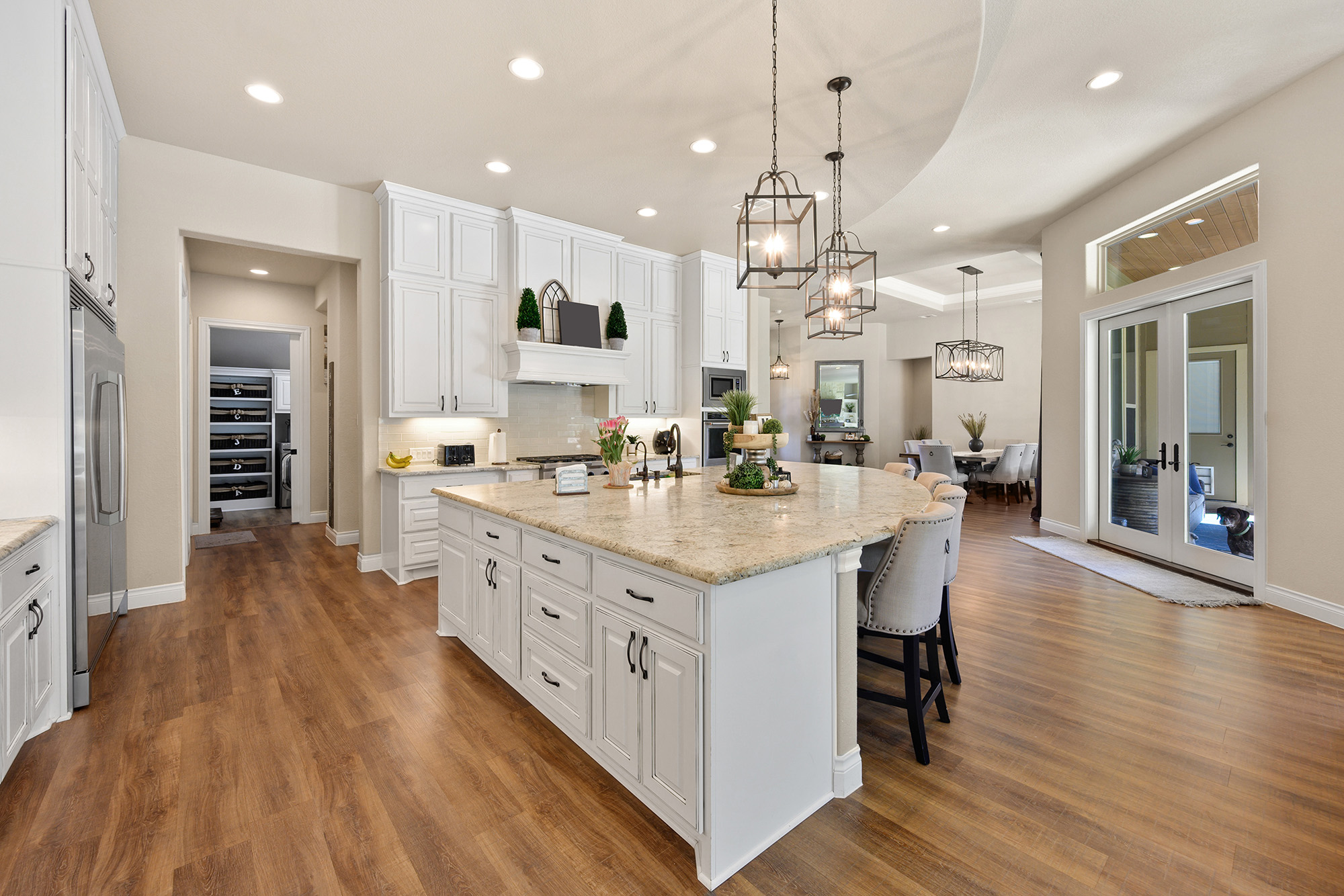
Hardwood flooring is not static—it is a living material that responds continuously to its environment. In Colorado, improper humidity control is the single most common cause of hardwood failure. At Wagner Floors, we routinely inspect new floors less than two years old showing irreversible damage caused by sustained low indoor humidity.
Before selecting hardwood, homeowners should contact us at Littleton, CO to evaluate baseline humidity levels and HVAC compatibility.
The Science of Moisture in Hardwood
Hardwood contains bound water within its cellular structure. When ambient relative humidity drops, wood releases moisture until equilibrium is reached. When RH rises, wood absorbs moisture.
The safe operating range for hardwood flooring is 35–55% RH. Below this threshold, shrinkage accelerates rapidly.
Why Colorado Homes Are High Risk
Colorado’s climate combines:
High elevation (lower absolute humidity)
Long heating seasons
Forced-air HVAC systems
Radiant heat installations
Winter indoor RH commonly drops into the teens, far below safe limits for wood flooring.
Common Failure Patterns from Low Humidity
Low humidity damage is progressive and permanent:
Gaps between planks that never fully close
End-joint separation exceeding manufacturer tolerances
Surface checking and micro-cracks
Finish splitting along grain lines
Cupping reversal once humidity returns
These failures are environmental—not installation defects—and are excluded from warranties.
New Floors Are the Most Vulnerable
Freshly milled hardwood has not fully stabilized. During the first 60–90 days post-installation, rapid moisture loss causes accelerated shrinkage.
Homes in Denver, Littleton, and Castle Rock experience this most severely during the first winter after installation.
Radiant Heat Creates a Microclimate
Radiant heat systems warm hardwood from below, drying it from the underside first. This creates steep moisture gradients within the plank, increasing internal stress.
Without humidification, RH near the floor surface can fall below 15%, even when room-level sensors read higher values.
Portable Humidifiers Are Not Enough
Small humidifiers treat air volume inconsistently and fail to stabilize RH across rooms or floors. Hardwood requires whole-home humidification, ideally:
Steam-based systems
Integrated with HVAC
Controlled by digital sensors
Monitoring Prevents Damage
Hygrometers should be placed:
On each floor level
Away from vents
Near exterior walls
Smart monitors allow proactive correction before damage becomes visible.
Installation Cannot Overcome Environmental Neglect
Even perfectly acclimated and installed hardwood will fail if RH remains outside acceptable ranges for extended periods. Environmental control is a homeowner responsibility—and the defining factor in hardwood longevity.
Final Thoughts
Hardwood flooring thrives only in balanced environments. In Colorado, humidity control is not optional—it is structural maintenance.
If you’re installing hardwood or experiencing issues, schedule a shop-at-home consultation with Wagner Floors. We serve homeowners across Denver, Littleton, Aurora, Parker, and Lakewood, CO. Call today to protect your floors long-term.


