
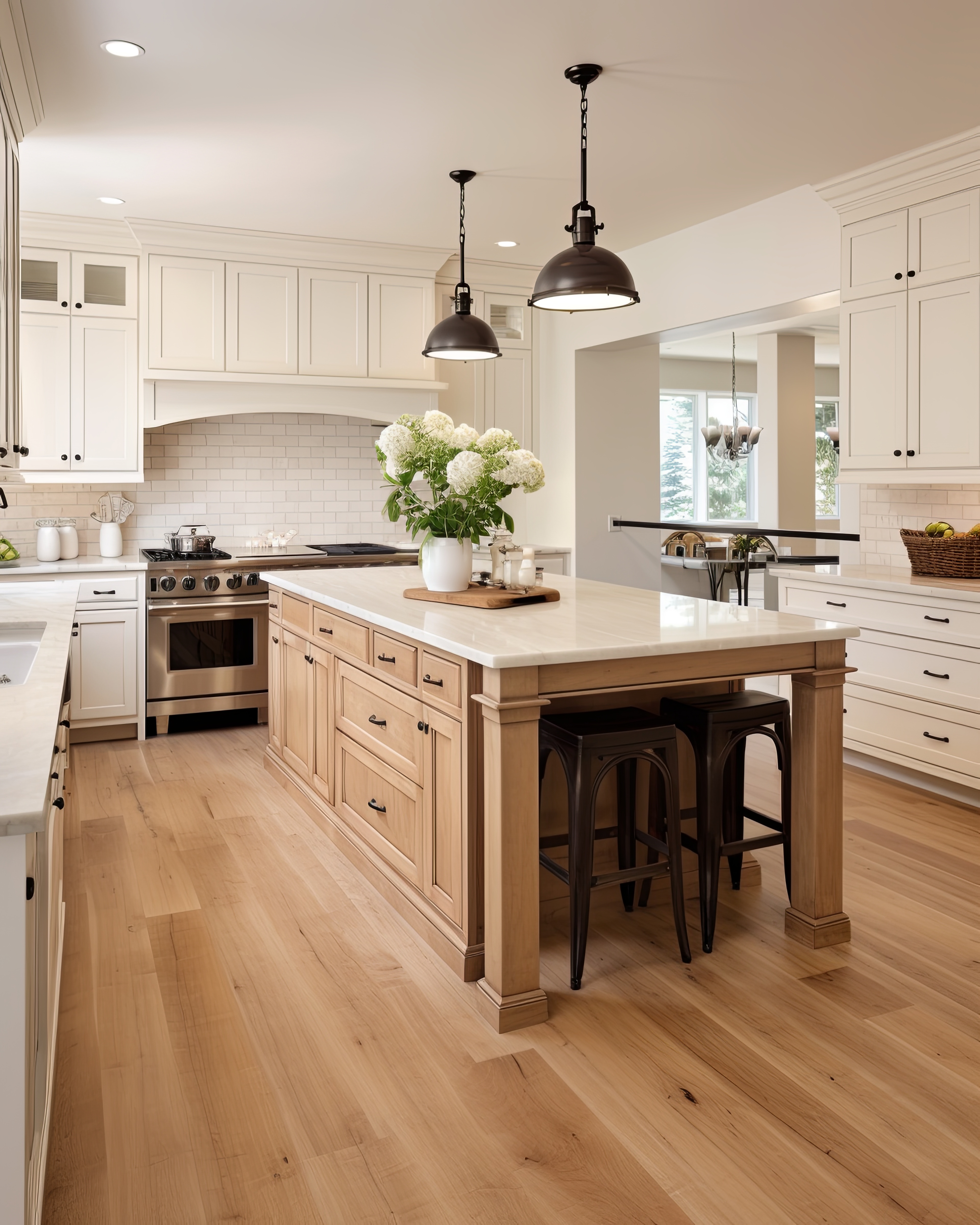
Bringing the warmth and natural beauty of hardwood into the kitchen creates a beautiful, uninterrupted visual flow that makes your entire main level feel larger. Running the same material from your living space straight into the cooking zone looks spectacular, but the kitchen introduces specific environmental challenges. Between splashes near the dishwasher, dropped ice cubes, and the slush tracked in during a heavy winter storm, it is completely natural to feel a bit nervous about using real wood in a cooking space.
If you love the look of kitchen hardwood, understanding the realistic moisture boundaries of modern materials is essential. By focusing on advanced product specs and proper installation safeguards, you can enjoy a beautiful wood floor in your cooking space without constant anxiety about water damage.
Why Engineered Hardwood Excel in Our Climate
Traditional solid hardwood planks expand and contract significantly when exposed to changes in moisture and humidity. Out here along the Front Range, our indoor air shifts from bone-dry in the winter when the furnace runs to much more humid during rainy summer afternoons. Because solid wood breathes so much, a kitchen sink overflow or a slow dishwasher leak can easily cause solid planks to cup, crown, or warp.
Engineered hardwood is a far more stable and resilient choice for a Colorado kitchen. Engineered planks are constructed using a real wood veneer on top, bonded over multiple layers of cross-grain plywood or a high-density fiberboard (HDF) core. This cross-layered design counteracts the natural movement of the wood. When the humidity rises near a steaming stove or a hot dishwasher cycle, engineered boards remain flat and stable, resisting the structural warping that can ruin a solid wood floor.
Understanding Edge-Sealing Technology and Topcoats
When water hits a wood floor, the surface finish isn't usually where the trouble starts. The real vulnerability lies at the seams between the planks. If water seeps down into the joints, it attacks the raw wood core from the side, causing the edges of the boards to swell and chip.
To protect against this, modern kitchen-ready engineered hardwoods incorporate specific manufacturing advancements:
Hydrophobic edge coatings: High-quality lines feature specialized water-repellent sealants applied directly to the tongue-and-groove or click-lock locking mechanisms during manufacturing. This barrier stops moisture from penetrating the seams if a drink gets spilled.
Factory-applied urethane finishes: Premium planks are sealed with multiple coats of an advanced, UV-cured urethane topcoat infused with aluminum oxide. This creates an incredibly hard, non-porous shell that prevents water droplets from absorbing into the face of the wood.
Tight locking joints: Advanced click-lock profiles lock the boards together under intense physical tension, leaving virtually no physical gap for standing water to slip through.
Living with Kitchen Hardwood: Realistic Time Limits
It is vital to maintain realistic expectations about what "water-resistant" means in the flooring industry. No real wood product is completely waterproof. Water-resistance specs mean the floor is engineered to hold back standing spills for a specific window of time—often anywhere from 24 to 72 hours, depending on the manufacturer—before moisture begins to penetrate the joints.
This means everyday splashes near the sink or a dropped ice cube pose zero threat to your floor, provided you wipe them up when you are done cooking. The finish will easily hold the liquid on the surface, preventing damage. However, a major plumbing failure left unaddressed for days will eventually overcome the floor's defenses. Utilizing a high-quality underlayment vapor barrier and placing a small, breathable mat directly in front of your sink provides an extra layer of security for high-use zones.
Enjoy a Beautiful, Functional Kitchen Floor
Integrating engineered hardwood into your kitchen layout allows you to enjoy a seamless, high-end look throughout your entire main level without sacrificing practical performance. By selecting products built with stable cross-grain cores, factory-sealed edges, and durable aluminum oxide topcoats, you gain a resilient floor capable of handling the daily realities of an active cooking space. A focus on technical specifications and simple, proactive care ensures your kitchen floors remain flat, stable, and stunning for decades.
Let's Find the Perfect Kitchen Flooring for Your Home
Selecting a hardwood floor that can safely handle kitchen traffic works best when you can look closely at the locking systems and finish specs right next to your cabinetry. Seeing how different wood stains look under your home's natural light makes it easy to choose a product that offers both beautiful style and long-term peace of mind. Whether you want to browse our complete collection at our Littleton showroom or have us bring the samples directly to your driveway in our mobile showroom van, Mark, Kelly, and the team are here to help you compare engineered core structures, explain manufacturer moisture warranties, and ensure your new floor is installed with total precision.
Visit our showroom to see our wide selection of engineered hardwood options and talk face-to-face with our team about your project. Contact us today to get an estimate, and we will help you bring your vision to life.


